
Introduction
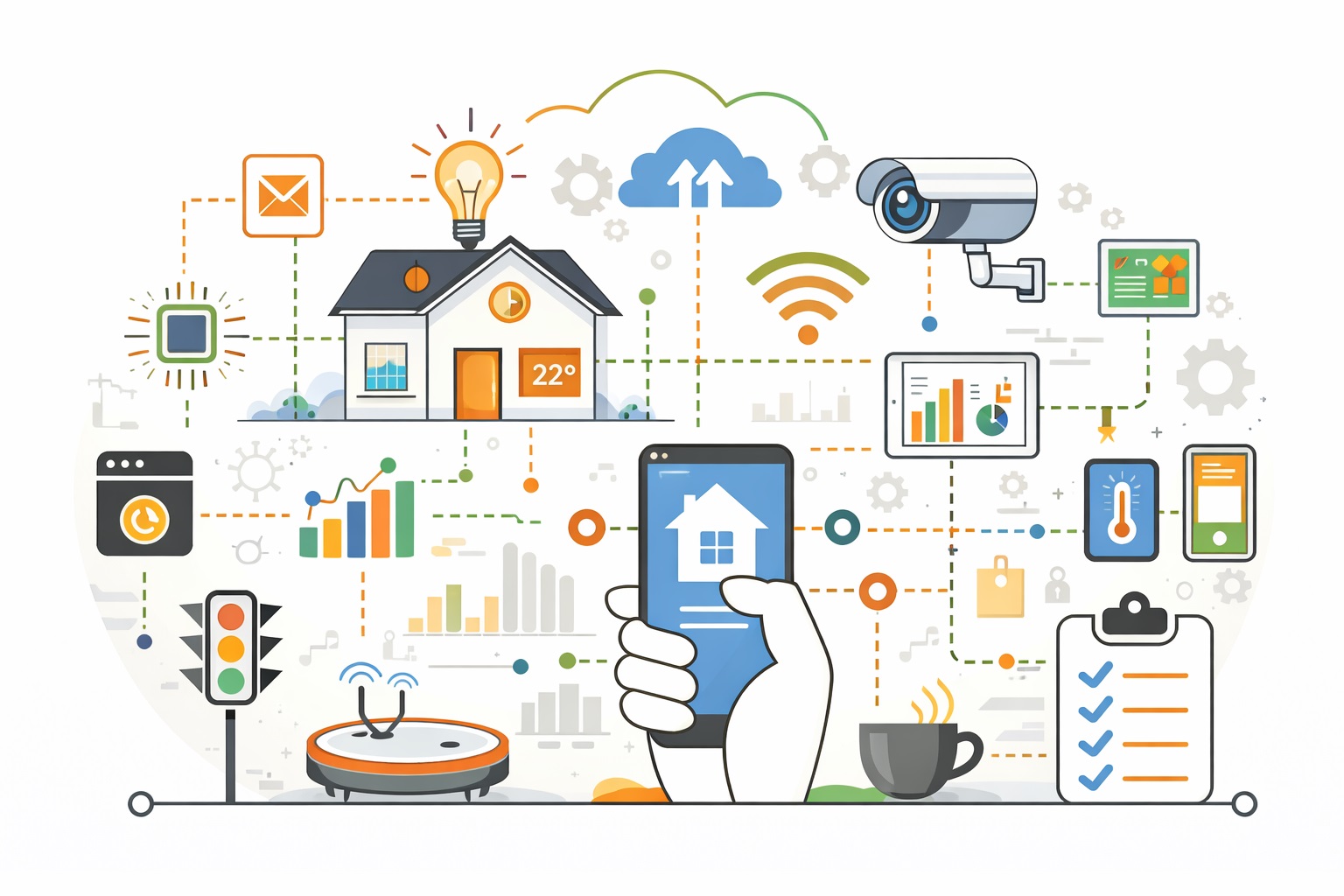
Technology is changing faster than ever. Today, it is not just computers and smartphones that are connected to the internet. Many everyday objects like watches, lights, refrigerators, and even cars can now connect and communicate with each other. This concept is known as the Internet of Things (IoT).
If you are not from a technical background, IoT may sound complex. But in reality, it is quite simple. In this blog, we will explain IoT in easy language, with real-life examples, so that anyone can understand it.
What is IoT?
The Internet of Things (IoT) refers to a network of physical objects that are connected to the internet and can collect, share, and act on data.
These objects include:
- Smart devices
- Home appliances
- Vehicles
- Wearable gadgets
Each of these devices has sensors and software that allow them to communicate.
Simple Definition
IoT means everyday devices connected to the internet that can send and receive data.
Example
Imagine a smart light bulb:
- You can turn it on or off using your phone
- It can adjust brightness automatically
- It can even follow a schedule
This is a basic example of IoT in daily life.
How Does IoT Work?
IoT works through a simple process. You do not need technical knowledge to understand it.
1. Data Collection
Devices collect information using sensors.
Example: A smartwatch tracks your steps and heart rate.
2. Data Transfer
The collected data is sent through the internet to a system or app.
3. Data Processing
The system analyzes the data and decides what to do.
4. Action
The device performs an action or shows results to the user.
Example:
If your fitness band detects low activity, it may remind you to walk.
Real-Life Examples of IoT
IoT is already around us. You may be using it without realizing it.
Smart Homes
- Smart lights that turn on automatically
- Voice assistants like Alexa or Google Assistant
- Smart security cameras
Wearable Devices
- Fitness bands
- Smartwatches
Smart Appliances
- Refrigerators that track food items
- Washing machines controlled by mobile apps
Transportation
- GPS navigation
- Smart parking systems
- Connected cars
Healthcare
- Devices that monitor patients remotely
- Smart health trackers
Benefits of IoT
IoT is not just about modern gadgets. It provides real value in everyday life.
1. Convenience
You can control devices from anywhere using your phone.
2. Time Saving
Automation reduces manual work.
3. Energy Efficiency
Smart devices reduce unnecessary energy usage.
4. Better Decision Making
Real-time data helps in making informed choices.
5. Improved Safety
Smart systems can detect problems early, like gas leaks or security issues.
IoT is not limited to homes. It is transforming many industries.
Healthcare
Doctors can monitor patients remotely, which is useful for elderly care and emergencies.
Agriculture
Farmers use IoT to check soil moisture, weather, and crop health.
Manufacturing
Machines with sensors can predict failures and reduce downtime.
Retail
Stores track inventory and understand customer behavior.
Smart Cities
IoT helps in managing:
- Traffic
- Waste
- Energy usage
IoT in Daily Life (India Perspective)
In India, IoT is growing quickly.
Examples include:
- Smart electricity meters
- App-controlled home appliances
- GPS tracking in delivery services
- Smart water management systems
Even affordable devices like smart plugs and security cameras are becoming common in homes.
Challenges of IoT
While IoT has many benefits, there are also some challenges.
1. Security Issues
Connected devices can be vulnerable to hacking if not properly secured.
2. Privacy Concerns
Devices collect personal data, which must be protected.
3. Cost
Initial setup of smart systems can be expensive.
4. Internet Dependency
IoT devices need a stable internet connection.
5. Device Compatibility
Not all devices work smoothly with each other.
Future of IoT
The future of IoT is very promising. It will become a major part of everyday life.
More Smart Devices
Almost every device will become connected in the future.
AI Integration
IoT combined with Artificial Intelligence will create smarter systems.
5G Technology
Faster internet will improve device performance.
Smart Cities
More cities will adopt IoT for better living conditions.
Automation Everywhere
From homes to offices, automation will increase.
How to Stay Safe While Using IoT
You can enjoy IoT safely by following simple steps:
- Use strong passwords
- Keep devices updated
- Buy products from trusted brands
- Use secure Wi-Fi networks
- Turn off devices when not needed
Why You Should Care About IoT
Even if you are not a tech expert, IoT affects your daily life.
- It makes life easier
- It saves time and energy
- It improves safety
- It helps you stay connected
Understanding IoT helps you make better decisions while using technology.
Conclusion
The Internet of Things (IoT) is changing how we live, work, and interact with technology. It connects everyday devices to make life simpler, smarter, and more efficient.
The best part is that you do not need technical knowledge to use IoT. It is designed for everyone.
As IoT continues to grow, it will become an essential part of our lives. Learning about it today will help you stay prepared for the future.
FAQs (SEO Boost Section)
What is IoT in simple words?
IoT means devices connected to the internet that can share data and perform tasks automatically.
What are examples of IoT?
Smartwatches, smart lights, connected cars, and fitness bands are common examples.
Is IoT safe to use?
Yes, if you use secure devices, strong passwords, and updated software.
Where is IoT used?
IoT is used in homes, healthcare, agriculture, transportation, and industries.